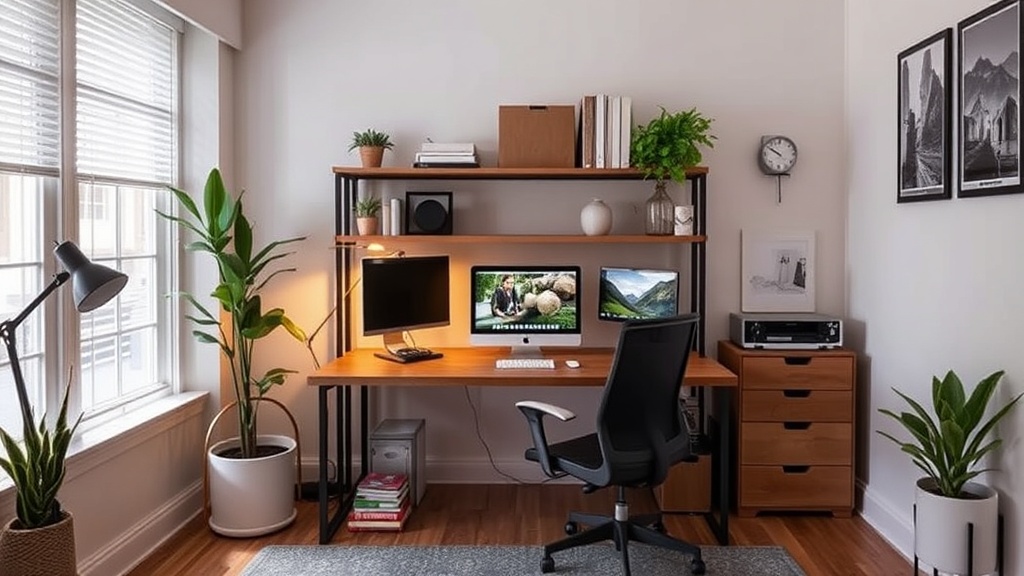
Setting Up a Productive Home Office in a Small Space

What you will learn about small-space workspace design
This guide covers the practical steps for building a functional home office when you don't have a spare room to spare. You'll learn how to select furniture that fits your footprint, how to manage cables without a mess, and how to maximize your vertical space to keep your desk clear. Whether you're working from a corner of your bedroom or a tiny nook in your living room, these steps help turn a cramped area into a focused-work zone.
Living in a smaller space means every square inch counts. You can't just throw a desk in a corner and expect it to feel like a real office; you need a plan that respects both your productivity and your living area. When your workspace is also your living space, the lines between "work mode" and "home mode" get blurry. We're going to look at how to set boundaries through physical organization and smart layout choices.
How can I fit a desk in a small room?
The biggest mistake people make is buying a standard-sized desk that eats up the room. Instead, look for furniture designed specifically for tight quarters. A wall-mounted desk or a "floating" shelf can save a significant amount of floor space. If you have a corner available, an L-shaped desk can tuck away much more effectively than a rectangular one.
Think about the footprint of your chair, too. A bulky executive chair will feel out of place in a small apartment, but a sleek, armless task chair can be tucked under the desk when you aren't working. This keeps the visual clutter low. If you're working in a multi-purpose room, try to use a desk that doubles as a console table or a side table when the workday ends. This keeps your home feeling like a home, not a cubicle.
| Desk Type | Best For | Space Impact |
|---|---|---|
| Wall-Mounted | Tiny nooks | Very Low |
| Corner L-Shape | Maximizing corners | Medium |
| Folding/Drop-leaf | Multi-use rooms | Low |
Where should I put my computer and cables?
Cables are the enemy of a clean, small-scale workspace. Nothing makes a small desk look more cluttered than a tangle of black wires hanging off the edge. To solve this, use cable management sleeves or even simple velcro ties to group wires together. You can also use a cable management box to hide your power strip and all those extra plugs out of sight.
If you're using a laptop, consider an adjustable stand. This raises the screen to eye level, which is better for your neck, and leaves more room on the desk surface for your keyboard or a notebook. For those who need more permanent setups, a monitor arm is a great investment. It clamps to the edge of the desk and lifts the screen up, freeing up the space directly underneath the monitor for your phone, a lamp, or your coffee mug. For more advice on ergonomic setups, check out the Mayo Clinic's guidance on ergonomics to ensure you're sitting correctly.
How do I organize my desk without a filing cabinet?
In a small space, a massive filing cabinet is out of the question. You need to think vertically. Use wall-mounted organizers like pegboards or floating shelves to keep your pens, notebooks, and even your headphones off the desk surface. A pegboard is a versatile tool—you can move things around as your needs change, and it keeps your desk clear for actual work.
For paper management, look into small desktop trays or even a simple tiered organizer. If you have a lot of documents, a small, slim-profile file box can sit on a shelf rather than on the floor. The goal is to get everything off the horizontal surface. If your desk is clear, your mind stays clearer. If you find yourself constantly searching for a pen or a charger, it's a sign that your vertical storage isn't doing its job.
Lighting is another often-overlooked element. A bright overhead light can feel harsh in a small room, but a dedicated desk lamp provides focused light exactly where you need it. A slim, architect-style lamp with a movable arm is ideal because it takes up very little room but provides plenty of light. This helps separate your work area from the rest of the room's lighting scheme. If you're worried about eye strain, you can find more information on proper lighting through the OSHA ergonomic guidelines.
Finally, don't forget about the "mental" end of the workspace. In a small apartment, your office is always in your peripheral vision. To prevent work stress from bleeding into your relaxation time, try to have a ritual that signals the end of the day. This might be as simple as closing your laptop and putting your notebook in a drawer, or even just covering your desk with a nice piece of fabric at night. By physically hiding the workspace, you give your brain permission to stop working.