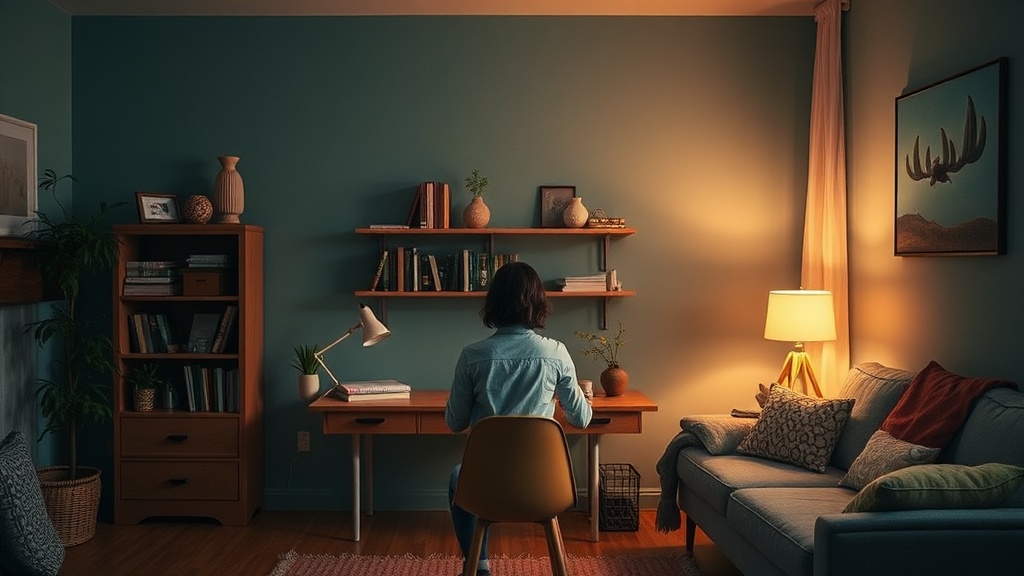
Why Your Home Routines Feel Chaotic — And How to Design Calm Into Your Days

What This Guide Covers
Here's something that might surprise you: the average person makes over 35,000 decisions every single day. By the time you sit down for dinner, your brain has already processed more choices than a chess grandmaster makes in an entire tournament. Most of those decisions happen within the walls of your home — what to wear, what to eat, when to leave, where you put your keys. It's no wonder so many of us feel mentally drained before noon. This guide isn't about adding more to your plate. It's about restructuring the small, repetitive moments that happen at home so they actually support you instead of slowly depleting your reserves.
Anders Campbell has spent the last few years testing different approaches to domestic life from his place in Tucson — where the desert light and slower pace have a way of making you notice what actually works versus what just looks good on Instagram. What follows are practical frameworks for building routines that stick, minus the aesthetic pressure or complicated systems that fall apart after a week.
What Makes a Routine Actually Stick?
Let's be honest — most advice about routines fails because it ignores the reality of how humans work. You don't need another color-coded schedule or a complex habit tracker that becomes its own source of stress. What you need is an environment that makes the right choices easy and the wrong ones slightly harder.
Start by identifying your "friction points" — those small moments where things go sideways. Maybe it's the morning scramble for clean socks. Maybe it's the 6 PM panic of not knowing what to cook. Maybe it's the Sunday evening dread that comes from a weekend with zero structure. Each of these friction points represents a decision point where you're operating on autopilot — and usually making choices that don't serve you well.
The fix isn't willpower. It's design. Research from the American Psychological Association shows that environment shapes behavior far more than motivation does. If you want to read more, put the book on your pillow. If you want to drink more water, fill a pitcher every night and place it where you'll see it first thing. These aren't hacks — they're acknowledgments that you're a human being, not a productivity machine.
Building Your Morning Launch Sequence
Mornings set the trajectory for everything that follows — but not in the way wellness influencers suggest. You don't need a ninety-minute ritual involving meditation, journaling, and cold plunges. You need a sequence of predictable actions that moves you from sleep to functional without requiring fresh decisions.
Think of it like a launch sequence at NASA. Each step triggers the next. Your alarm goes off (step one), which means you immediately drink the water you placed beside your bed last night (step two), which means you head to the bathroom to brush your teeth (step three), which means you see the clothes you laid out the evening before (step four). The sequence removes decision fatigue before it can take hold.
The key is specificity. "Wake up earlier" isn't a routine — it's a wish. "Alarm at 6:30, water, bathroom, dressed in the blue shirt and jeans on the chair, coffee preset to brew, out the door by 7:15" is a sequence you can execute on autopilot. The best part? Once a sequence becomes automatic, it stops requiring mental energy. That's energy you can redirect toward actual thinking — creative work, problem-solving, or simply being present with the people around you.
How Do You Build Transitional Moments Into Your Day?
Here's a truth that doesn't get talked about enough: the hardest part of any routine isn't the routine itself — it's the transition between activities. Moving from work mode to home mode, from parent mode to partner mode, from doing mode to rest mode. These transitions are where we lose our footing.
The solution is something psychologists call "implementation intentions" — basically, if-then plans that trigger automatic behavior. When I close my laptop, then I change my clothes. When I walk through the front door, then I put my phone in the drawer. When I finish dinner, then I take a ten-minute walk. These micro-rituals create boundaries that your brain can recognize and respect.
Physical spaces help here too. If you work from home, even part of the time, you need a clear signal that work is over. It might be as simple as closing a laptop and lighting a specific candle. It might be changing from "work clothes" into "home clothes" — even if both are comfortable. The action itself matters less than the consistency of the signal. Your brain learns: this action means we're done with that phase now.
Research published in the Journal of Personality and Individual Differences found that people who use consistent transitional rituals report significantly lower stress levels and better sleep quality. The ritual doesn't have to be elaborate — it just has to be reliable.
What Should Your Evening Wind-Down Actually Look Like?
Evenings are where good intentions go to die. You're tired, your willpower is depleted, and the siren call of scrolling through your phone feels irresistible. But here's the thing — evening routines matter more than morning ones because they determine the quality of your sleep, which determines everything about the next day.
The goal isn't perfection. It's a simple sequence that signals to your body that it's time to shift into rest mode. Start with a "shutdown ritual" — fifteen minutes where you handle the small tasks that would otherwise nag at you. Check tomorrow's schedule, set out clothes, make sure the coffee pot is ready, tidy the main living space. These aren't chores to dread; they're investments in tomorrow's peace of mind.
Then comes the transition. Dim the lights. Lower the temperature slightly if you can. Put screens away — or at least use blue light filters. The specifics matter less than the consistency. Your body is remarkably trainable. Given the same sequence of cues at roughly the same time each night, it will learn to associate those cues with sleepiness.
The final element is something to do instead of scrolling. Have a book ready. Have a simple craft or hobby — knitting, sketching, journaling. These activities occupy your hands and mind without the dopamine hits that keep you alert. Over time, they become associated with relaxation in a way that screens never quite manage.
Handling the Inevitable Disruptions
No routine survives contact with real life perfectly intact. Kids get sick. Work deadlines loom. Travel throws off your schedule entirely. The mistake most people make is treating these disruptions as failures rather than expected features of any sustainable system.
A better approach: build "minimum viable routines" — the absolute smallest version of your sequence that you can maintain even on bad days. Maybe your morning routine collapses to: drink water, brush teeth, get dressed. Maybe your evening routine becomes: five minutes of tidying, lights dimmed, book in bed. These aren't compromises — they're lifelines that keep you connected to the structure you've built.
When disruption happens (and it will), don't try to "catch up" or "make up for lost time." Just return to your minimum viable routine the next day. Consistency beats intensity every single time. A routine you maintain at 60% capacity for a year serves you better than one you execute perfectly for two weeks and then abandon.
How Long Does It Really Take to Build a Habit?
The old "21 days to form a habit" myth has been thoroughly debunked. Research from the European Journal of Social Psychology found that simple habits can take anywhere from 18 to 254 days to become automatic — with an average of 66 days. The timeline depends on complexity, consistency, and your individual circumstances.
This is actually good news. It means you can stop beating yourself up when a new routine doesn't feel natural after two weeks. It also means you should start small — really small. If your goal is to build a morning exercise habit, start with five minutes, not fifty. If you want to read more before bed, commit to one page, not one chapter. Success breeds success. Once the habit is established, you can expand it.
The other factor no one talks about: habits form faster when they're tied to existing routines. This is called "habit stacking" — attaching a new behavior to something you already do automatically. After I pour my coffee, I'll drink a glass of water. After I brush my teeth, I'll do five push-ups. After I sit down on the couch, I'll open my book instead of my phone. The existing habit becomes the trigger for the new one.
Creating Your Personal Routine Blueprint
There's no universal perfect routine — only the routine that works for your life, your energy patterns, and your obligations. Some people are sharpest in the morning; others hit their stride after dark. Some have predictable schedules; others are managing shift work or caregiving responsibilities that change daily.
The goal isn't to copy someone else's system. It's to design your own through experimentation. Try a morning sequence for two weeks. Notice what works and what doesn't. Adjust. Try an evening wind-down for a month. Track your sleep quality. Refine. Think of yourself as a scientist studying the subject of your own daily life — because that's exactly what you are.
And remember: the point of any routine is to support the life you want to live, not to become an obligation that weighs you down. If a routine isn't serving you, change it. If a habit stops making sense, let it go. The best routines are alive — they grow and adapt as you do. They're not chains; they're scaffolding.
Start small. Start today. Pick one friction point and design a simple fix. Then another. Over time, these small adjustments compound into something significant — a home life that actually supports you instead of constantly demanding from you. That's the real goal. Not perfection. Just a little more ease, a little more intention, and a lot less daily chaos.